


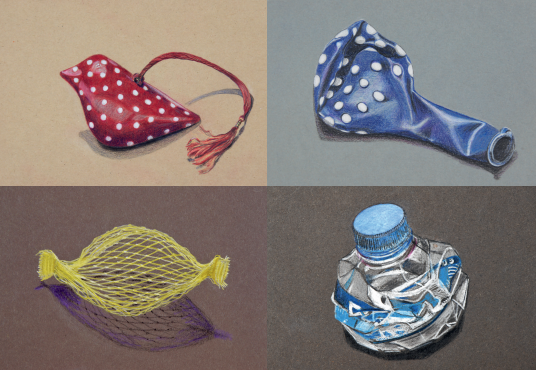
Exhibition „Collected Time“ – Marita Czepa
Dear friends of the ROOT Gallery, I cordially invite you to the vernissage of the
- Exhibition extended until 19.12.2014-
Jim Avignon - Birgit Ginkel - Boris Ivandic - Erich Reischke - Ingeborg Rauss - Ben Wagin
and artists of Calaca e. V.: Mario Vázquez - María Magdalena González
Vernissage on Thursday, 11 September 2014 from 7pm to 10pm
Ausstellungsdauer: 12.9.–9.11.2014
[r6_row]
[r6_col n="4″]
Birgit Ginkel:
Portraits of victims of the Berlin Wall 2013-2014, various crushed semi-precious and precious stones, crushed concrete from the Berlin Wall, gold leaf, cellulose, marble powder, champagne chalk on linen, all 35 x 35 cm
[/r6_col]
[r6_col n="4″]
Boris Ivandic:
THE WALL, 2014, mixed media on plywood, 250 x 75 cm x 110 cm. In the background on the wall: ALS HÄTTE ES UNS NICHT GEGEBEN, 2014, mixed media on plywood, 70 x 50 cm
[/r6_col]
[r6_col n="4″]
Jim Avignon:
East Side Gallery - design in original size, 2013, acrylic on wrapping paper, 3m x 13 m
[/r6_col]
[/r6_row]
In co-operation with the Akademie für Malerei Berlin | Galerie ROOT is a member of the Landesverband Berliner Galerien e. V.
Film evening: "Mission incognito: Jim Avignon" on Monday, 29 September 2014 at 7.30 pm
Performance by Calaca e. V. "Invisibles - People without papers" on
Sunday, 12 October 2014 at 3 pm, 4 pm, 5 pm
How do artists deal with the reunification of the two German states 25 years after the fall of the Berlin Wall? What questions about freedom and the limits of freedom drive artists? How have the borders within Europe shifted?
The exhibition poses these existential questions.
How can art position itself in this context?
At least 138 people died at the German-German border. Today, thousands of people are dying at Europe's external borders.
Both aspects are addressed by the artists in the exhibition in poignant and moving works of art.
The artists of Calaca e.V. Mario Vázquez and María Magdalena González have built a ship container out of canvas for their performances, which they perform in public spaces and which will be exhibited in the ROOT gallery. People are imprisoned in such shipping containers during their escape attempts. With their actions, the artists from Calaca e.V. are committed to helping people living in countries without passports and denounce the inhumane border fortifications of countless states that cost thousands of people their lives, including at Europe's external borders.
Performance by Calaca e. V. "Invisibles - People without papers" on Sunday, 12 October 2014 at 3 pm, 4 pm, 5 pm
Jim Avignon is represented in the exhibition with a 9 metre long and 3 metre high wrapping paper work, which was created on the occasion of the filming of the film "Mission incognito: Jim Avignon" at the Akademie für Malerei Berlin. The wrapping paper work is the design for the painting with which he painted over his own painting on the East Side Gallery Berlin last year, for which he received a lot of criticism. The East Side Gallery Berlin formed part of the border between East and West Berlin. 101 large-format pictures painted directly on the Wall symbolise the joy of the fall of the Wall. The East Side Gallery is a monument to the fall of the Wall and the peaceful overcoming of borders and conventions between societies and people.
We will be showing the film on Monday, 29 September 2014 at 7.30 pm in the gallery.
Ingeborg Rauss aims to use the methods of philosophical questioning to bring both everyday visual social life and the diversity of systems of order into their own form. Her de-individualised ciphers refer to structures, relations and narratives that shape our world. Internationally legible pictograms and personal image abbreviations serve as her means of expression.
New pictures have been created especially for this exhibition against the background of her concept
Birgit Ginkel gives each deceased person a face in her portrait series "Wall Dead". She meticulously researched the 138 deceased and found photos from which she created her portraits. The aim is to portray all 138 people who died at the Wall, all in 40 x 40 cm format. Her artistic approach is to use the means of art to alleviate suffering through mindfulness, which is expressed in her art, and to bring peace through art. She works with special materials such as lapis lazuli, rock crystal, gold leaf and special flower essences, which she adds to her colours and also to her painting primers, with the intention that they should unfold their special effects in the work of art and on the viewer. For example, she always mixes crushed concrete from the Berlin Wall as a site of disaster into the pictures of the dead, which decades later is to be pacified in its unfortunate effect by adding gold leaf and orange calcite.
Boris Ivandic has reconstructed a section of the Berlin Wall for his installation. He is interested in the western and colourful side of the former Berlin Wall as a public and anarchistic image carrier, which people have appropriated by means of pictorial messages, and the barren, bleak and deadly eastern side of the Berlin Wall. The difference between the Berlin Wall, implicitly a reconstructed section of the Wall, and the canvas in terms of the message of one and the same pictorial motif is part of his exploration. Born in Bosnia-Herzegovina in 1951, Ivandic studied art and philosophy in Zagreb and at the Ljubljana Academy of Fine Arts. After ten years in Paris, he moved to Berlin in 1992. Between shows in Europe, Chicago, Shanghai, Nanjing and Beijing, Ivandic exhibited with Cornelissen as early as 2001. The paintings, harmonious despite their immense richness and dynamism, in which the colours also erupt into reliefs, combine the abstract with the figurative, such as a nude by Ivandic, a drawing of the German Chancellor, animals, plants and fantasy creatures.
Erich Reischke is a sculptor. His sculptures on the sculpture field from the sculpture symposium 1961-1962 in the Tiergarten in front of the Federal Chancellery and next to the Tipi tent are probably very well known to many Berliners, they are now a kind of matter of course there.
The sculptures were created during a sculptors' symposium organised by young aspiring sculptors in Berlin, including Erich Reischke, in protest at the construction of the Berlin Wall. In August 1961, they gathered on this site, which was rather remote at the time due to the sector border, to spend a few months carving their response of freedom to the measure of unfreedom in stone through their sculptural work directly on the border between East and West. They deliberately chose the time and place to make a statement in favour of freedom.
It took around 8 months to create these sculptures, which can still be seen today as contemporary witnesses to this historic situation. Where the sculptors worked on their stones, they still stand today, 50 years later. Moss grows on some of the sculptures, which stand under trees. The stele by Erich Reischke is closest to the Federal Chancellery. It stands a little apart from the other group of sculptures, in the open air. The stone is therefore in good condition. Today, the political situation is completely different. The stele still stands in a historically important place. Back then, the young sculptors had an unerring instinct for a historically important place that was nevertheless always a tad out of the way, so that despite being jeopardised several times in recent decades, they are still standing on the spot. The stones belong to the sculptors, the city did not buy them back then and still hasn't done so today. In the meantime, all the sculptors have died. Erich Reischke, who has just turned 83, is the only survivor of the group. He is currently recovering from the effects of a stroke he suffered at the beginning of the year.
The sculpture designs for the Berliners and other sculptures are on display in the exhibition.
The Berlin action artist Ben Wagin has already erected several memorials to the Berlin Wall. On 9 November 1990, exactly one year after the fall of the Wall, he presented the highly acclaimed "Parliament of Trees" in the government district. In a new action, which could be seen in front of the Brandenburg Gate on 6 March 2014, the artist reconstructed the Wall with folders and thus visualised the former border. With his work, Wagin wants to draw attention to the fact that the deadly wall was initially only an idea in the planners' files. The complete installation to mark the 25th anniversary of the fall of the Wall will be on display in the memorial room of the Bundestag Library and in the House of the European Commission in Brussels.
Dear friends of the ROOT Gallery, I cordially invite you to the vernissage of the
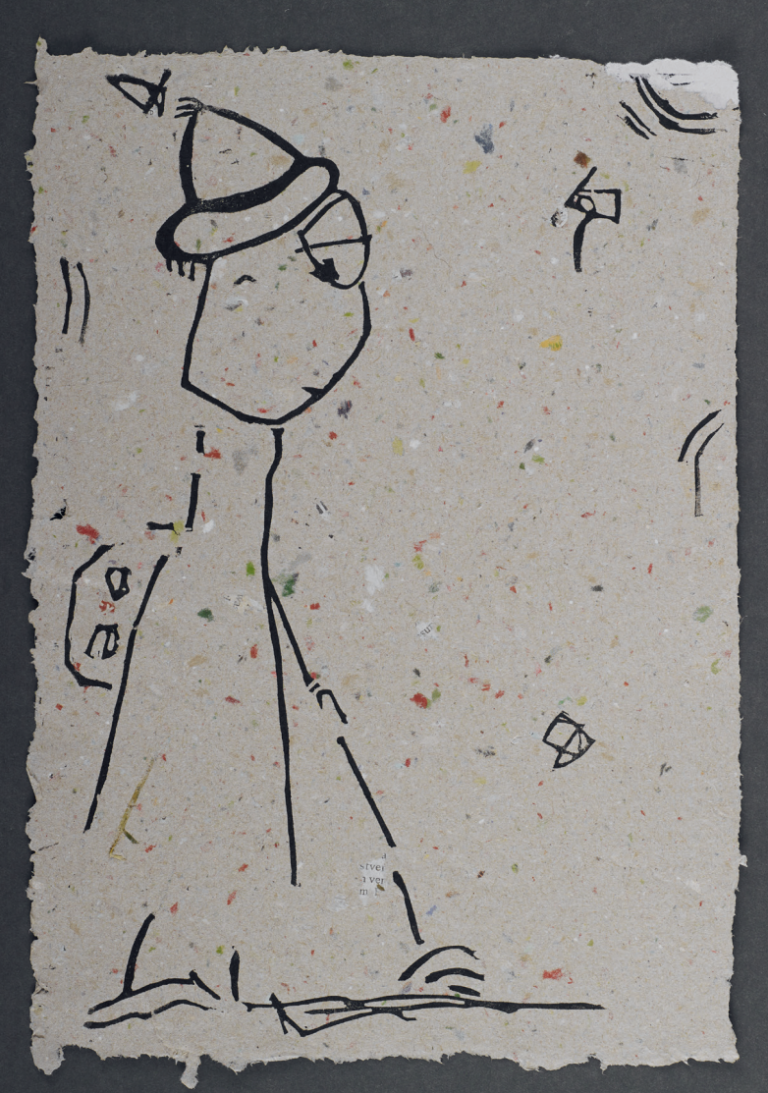
Dear friends of the Akademie für Malerei Berlin, I cordially invite you to the
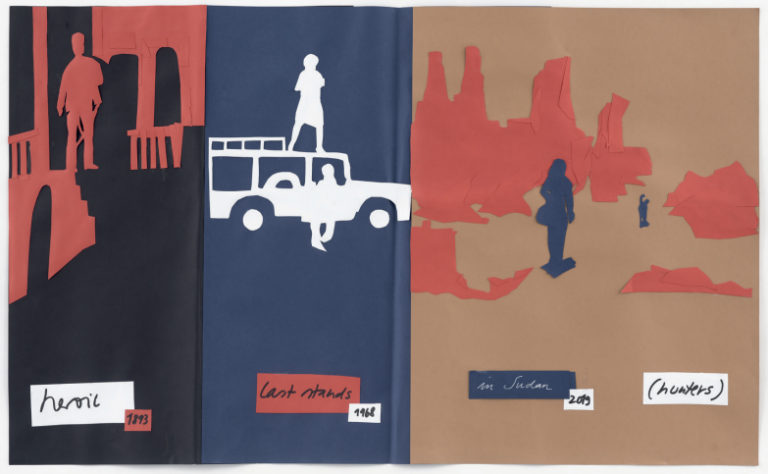
Dear friends of the Akademie für Malerei Berlin, I cordially invite you to the
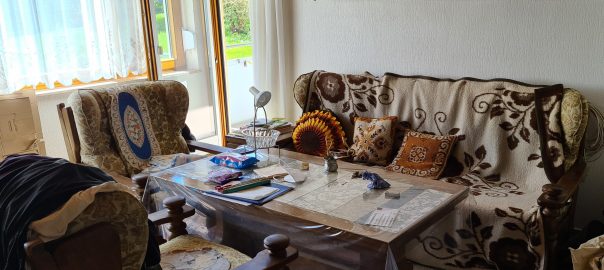
Further information can be found here: https://root-on-the-road.de/2026/05/30/bald-ist-es-wieder-so-weit-die-galerie-root-startet-ihr-8-plein-air-mal-projekt-root-on-the-road-vom-13-7-17-7-2026-diesmal-zum-thema-nachlass-loslassen-in-ravensburg/


